
Customs and Certification Procedures in Travertine Import
Your trusted partner for delivering premium natural stones to global markets with excellence and reliability!
Customs and Certification Procedures in Travertine Import
Customs and Certification Procedures in Travertine Import
The import and export of travertine into Europe requires not only product quality but also accurate documentation, compliance with EU standards, and efficient customs management. For wholesalers and importers, these steps determine the smooth entry of goods into the European market.
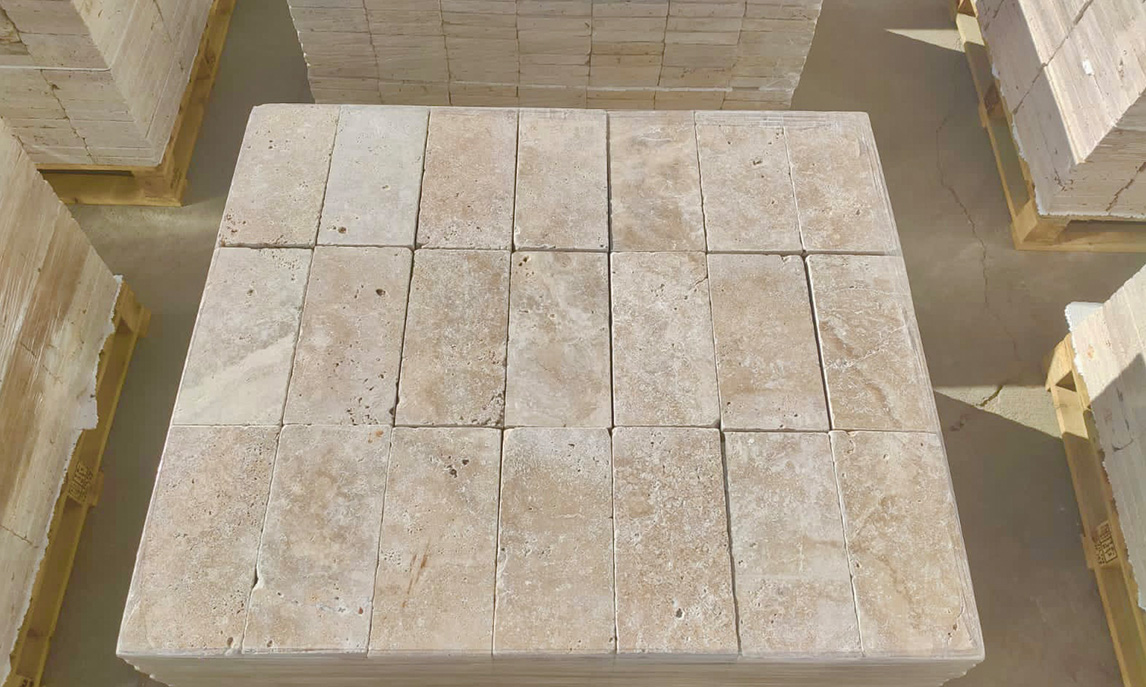 Required Documents for Travertine Import
To export travertine from Turkey to Europe, the following documents are essential:
-
Invoice & Packing List
-
Certificate of Origin
-
CE Certificate / Declaration of Performance (DoP)
-
Quality Test Reports (EN Standards)
-
Customs Declaration and HS Code (6802.91)
These documents ensure legal importation and traceability across the EU.
CE Marking and EU Standards
The CE mark confirms that travertine meets European safety and performance requirements. Tests cover:
-
Mechanical strength
-
Density and porosity
-
Slip resistance
-
Water absorption rate
Testing is performed by TÜRKAK-accredited labs or certified EU testing institutions.
Step-by-Step Customs Process
-
Product Preparation: Measurement, palletization, labeling.
-
Document Verification: Exporter issues origin and CE certificates.
-
Arrival at EU Port: Goods declared at customs.
-
Physical Inspection: Random checks or lab testing if required.
-
Free Circulation: Once approved, the goods enter the EU market.
Import Regulations by Country
-
Germany: Strict documentation accuracy and valid quality certificates.
-
France: Requires environmental certification for green building projects.
-
Italy: Must comply with CE and EN norms.
-
United Kingdom: Post-Brexit, additional import documentation applies.
-
Romania & Poland: Simpler customs for Standard Mix Travertine.
-
Austria & Switzerland: Prefer eco-certified, sustainably produced stones.
Quality Control and Inspection
Before shipment, travertine undergoes:
-
Dimensional tolerance check
-
Color and vein consistency
-
Surface finish inspection (honed, polished, tumbled)
-
Packaging and labeling verification
Importers may request third-party inspection reports (SGS, Bureau Veritas) before shipment.
Logistics and Transportation
-
Sea freight (FCL / LCL containers) is the most common shipping method.
-
Land transport is popular for direct shipments from Turkey to Germany, France, and Romania.
-
Proper palletizing and shrink wrapping prevent damage during transit.
Sustainability Certifications
European buyers increasingly require environmental compliance certificates such as ISO 14001 or Eco-label, giving Turkish exporters an edge in eco-conscious markets.
Conclusion
Successful travertine export to Europe depends on accurate documentation, compliance, and transparent logistics. Turkish suppliers mastering these processes continue to strengthen their position as trusted partners in the European natural stone industry.